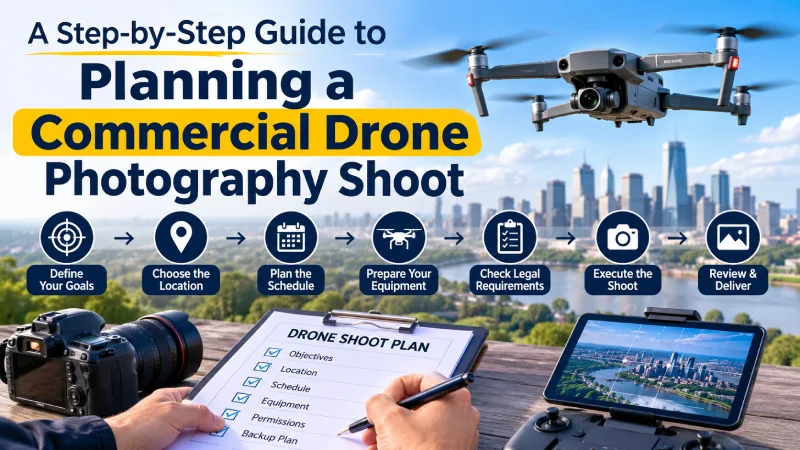
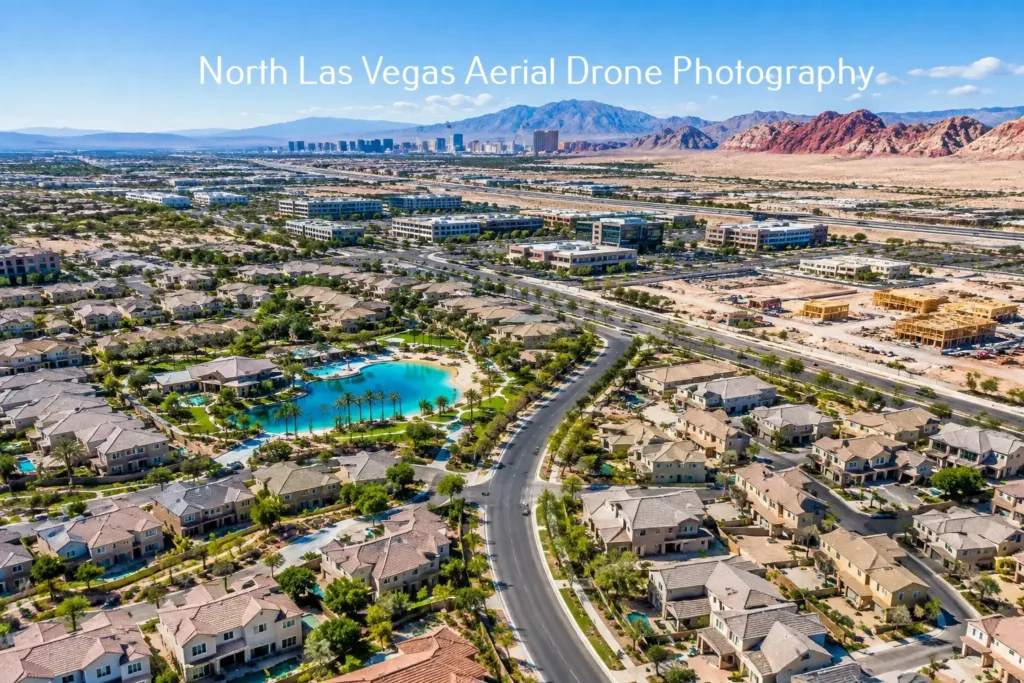
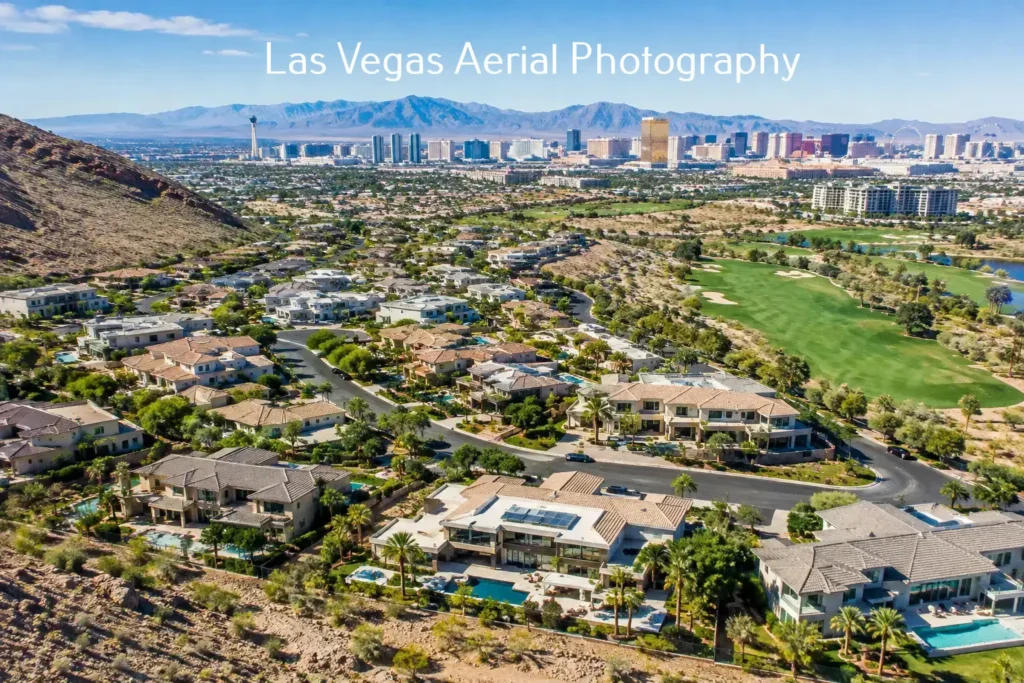
Aerial media can make a luxury listing feel larger, give investors a clear view of a development site, or show a commercial property in its full neighborhood context. But the right perspective only helps if it is captured legally, safely, and with a purpose. Knowing what to look for when hiring a drone pilot in Las Vegas protects your project, your schedule, and the value of the final imagery.
Las Vegas Valley airspace is not a place for casual flying. Between Harry Reid International Airport, Nellis AFB, private heliports, stadium activity, special events, and fast-changing weather, a polished reel is only one part of a professional aerial operation. The pilot you hire should bring flight credentials, local planning knowledge, and a production process built around your business objective.
Start With FAA Certification and Legal Flight Planning
The first question is straightforward: Is the pilot FAA Part 107 certified? Commercial drone photography and videography require a Remote Pilot Certificate from the Federal Aviation Administration. A pilot who isn’t certified may be able to fly a drone, but that doesn’t make the operation legal for a real estate listing, construction update, marketing campaign, or paid commercial project.
Certification is the baseline, not the finish line. Ask how the pilot handles airspace review before the shoot. Many locations across Las Vegas, Henderson, and nearby communities fall within controlled or sensitive airspace. A professional identifies the property location, checks applicable restrictions, seeks authorization when needed, and adjusts the flight plan before arriving on site.
This matters especially for properties near Harry Reid International Airport, Nellis AFB, North Las Vegas Airport, and active helicopter corridors. No reputable provider should promise a flight before reviewing the address and the conditions for that date. In some cases, a legal flight may require added coordination, a different altitude, a revised camera angle, or a rescheduled shoot. That is not an inconvenience. It shows the pilot is protecting the project from avoidable risk.
Confirm Insurance That Matches the Assignment
Drone insurance is not a decorative credential. It is a practical safeguard for owners, agents, developers, contractors, and their clients. Ask whether the pilot carries commercial liability insurance and whether they can provide proof of coverage before work begins. Larger sites, commercial properties, construction zones, and projects with active tenants may require particular coverage limits or additional insured documentation.
Insurance should be paired with sound operating practices. A professional pilot assesses takeoff and landing areas, pedestrian traffic, nearby roads, overhead hazards, reflective surfaces, and active work zones. They should also set clear boundaries for people on site and communicate with the project contact before launching.
For a construction site, the safest place to launch may not be the most convenient place to park. For a luxury residence, privacy and neighboring properties may affect which angles you can capture. Good aerial work balances the desired shot list with the realities of the location.
Evaluate the Pilot’s Eye, Not Just Their Drone
A drone is a camera platform, not a marketing strategy. The strongest aerial content does more than show a property’s roof and driveway. It establishes scale, location, access, views, lot boundaries, nearby amenities, and the relationship between the asset and its surroundings.
Review a pilot’s portfolio with your own project in mind. For residential real estate, look for clean vertical compositions, natural color, thoughtful framing, and images that make sense alongside ground-level listing photography. For land and development, look for wide establishing views, accurate site context, road access, utility corridors where appropriate, and repeatable vantage points for progress documentation.
Video deserves separate scrutiny. Cinematic footage should feel intentional, with steady movement, controlled speed, and transitions that support the story of the property. Fast flyovers can be visually exciting, but they are not always useful. A commercial investor may need a clear, stabilized overview of ingress, parking, neighboring businesses, and site activity more than a dramatic maneuver.
Ask to see work similar to yours. A pilot who excels at hospitality footage may still be a strong choice for commercial real estate, but they should be able to explain how they would adapt their visual approach to your audience and intended use.
Ask How the Shoot Will Support Your Business Goal
Before booking, be clear about what the content needs to accomplish. Aerial photography for a home listing is different from a monthly construction update, a land acquisition presentation, or leasing media for a retail center. The right drone pilot will ask useful questions before proposing a flight plan.
For example, a listing agent may need hero images optimized for MLS, social media, and property websites. A developer may need a combination of progress imagery, overhead site views, and stakeholder-ready video. A property manager may need current exterior documentation before a renovation, roof project, or tenant improvement.
A strong provider translates those needs into a specific deliverable plan. That plan should address the number and type of edited photos, video length and format, whether 360-degree photo spheres are needed, and where the final assets will be used. It should also clarify whether raw files are included, since raw footage isn’t automatically useful to every client and may add unnecessary storage and editing work.
Be wary of vague packages that promise “all footage” without defining what is edited, delivered, or licensed for use. Clear scope prevents mismatched expectations after the flight.
Look for Local Airspace Knowledge and Real Contingency Plans
Desert light can be spectacular, but it is not predictable. Harsh midday sun, wind gusts, heat, haze, monsoon activity, and seasonal smoke can change the quality and safety of a shoot. A professional pilot monitors conditions and recommends the right time of day for the desired outcome.
Golden-hour footage may be ideal for a high-end home or a hospitality property, while a midday capture can be more practical for construction documentation where visibility and consistency matter more than mood. The best choice depends on the asset, the audience, the project schedule, and the message you need the media to convey.
Ask what happens if wind, rain, airspace restrictions, or an unexpected site condition prevents safe flight. The answer should include a realistic rescheduling policy and timely communication, not a rushed attempt to fly in unsuitable conditions. Weather holds can be frustrating, but a compromised flight can cost far more than a brief delay.
Make Turnaround, Editing, and File Delivery Part of the Decision
Aerial media is often tied to a launch date, investor meeting, listing activation, or construction report. Confirm turnaround before the shoot, including when you will receive edited stills, final video, and any 360-degree assets. Faster is valuable, but only if the provider maintains quality control.
Ask what the editing process includes. Professional post-production may involve exposure balancing, color refinement, perspective corrections, stabilization, and the careful removal of minor distractions where appropriate. It should never misrepresent a property. For example, editing should not conceal major off-site conditions, alter boundaries, or create a misleading view of the asset.
Delivery should also be practical. You need correctly sized files for the channels that matter to your campaign, whether that means high-resolution marketing images, vertical social clips, widescreen video, or presentation-ready files. Naming conventions and organized folders may seem minor, but they save real time when multiple stakeholders need access.
Questions Worth Asking Before You Book
A short conversation can reveal whether a provider runs a dependable commercial operation. Ask these questions before committing to a date:
- Are you FAA Part 107 certified, and can you provide proof?
- Do you carry commercial liability insurance for this type of assignment?
- Have you reviewed the property’s airspace and any required authorization?
- What deliverables, editing, turnaround time, and usage rights are included?
- How do you handle weather delays, site access issues, or temporary flight restrictions?
- Can you show examples that match my property type or project goal?
The answers should be specific and calm. A qualified pilot does not need to overpromise because their process already accounts for the variables that can affect an aerial shoot.
Choose a Partner Who Reduces Work, Not One Who Adds It
Hiring a drone pilot should remove a task from your team, not create a new layer of coordination. The ideal provider handles pre-flight planning, on-site communication, legal considerations, capture, editing, and organized delivery while keeping you informed when your decisions are needed.
For clients who need dependable aerial imaging across the valley, Sky View LV combines FAA-certified flight operations, commercial insurance, and high-impact visual storytelling for real estate, land, construction, and commercial projects. The goal is not simply to put a drone in the air. It is to create visual assets that give buyers, tenants, investors, and project stakeholders a clearer reason to pay attention.
When the property, deadline, and audience all matter, choose the pilot who treats aerial media as a business tool. The right flight plan can turn an overlooked location, a complex site, or a strong listing into a perspective people remember.