Drone Photography: Capturing Aerial Views of Las Vegas
Drone Photography in Las Vegas: Capturing Breathtaking Aerial Views
Las Vegas is world-famous for its dazzling resort corridor, vibrant nightlife, and iconic architecture. Beyond the glowing neon, however, lies a dramatic landscape of rugged desert valleys and sandstone mountain ranges. Experiencing this contrast from above offers an entirely new perspective—and professional drone photography in Las Vegas is the ultimate way to capture it.
Whether for commercial real estate, tourism campaigns, or aerial cinematography, unmanned aircraft systems (UAS) deliver captivating, high-resolution imagery once reserved exclusively for expensive helicopter flights.
Why Drone Photography is Essential in Las Vegas
Drones have revolutionized commercial media and visual storytelling across Southern Nevada. Using high-resolution sensors and stabilized gimbals, professional remote pilots unlock capabilities that ground photography cannot replicate:
-
Unmatched Aerial Perspectives: Elevate visuals up to 400 feet to reveal hidden patterns, grand architectural footprints, and sweeping landscape backgrounds.
-
Dynamic Framing & Angles: Position cameras at precise elevations to isolate property features, map vast job sites, or track moving subjects.
-
Cost-Effective Production: Eliminate the high logistical costs and noise constraints of traditional manned aircraft chartering.
-
High-Impact Visual Marketing: Stand out in competitive markets like real estate, hospitality, and event production with high-converting imagery.
Top Locations for Las Vegas Aerial Imagery
1. The Las Vegas Strip & Architectural Landmarks
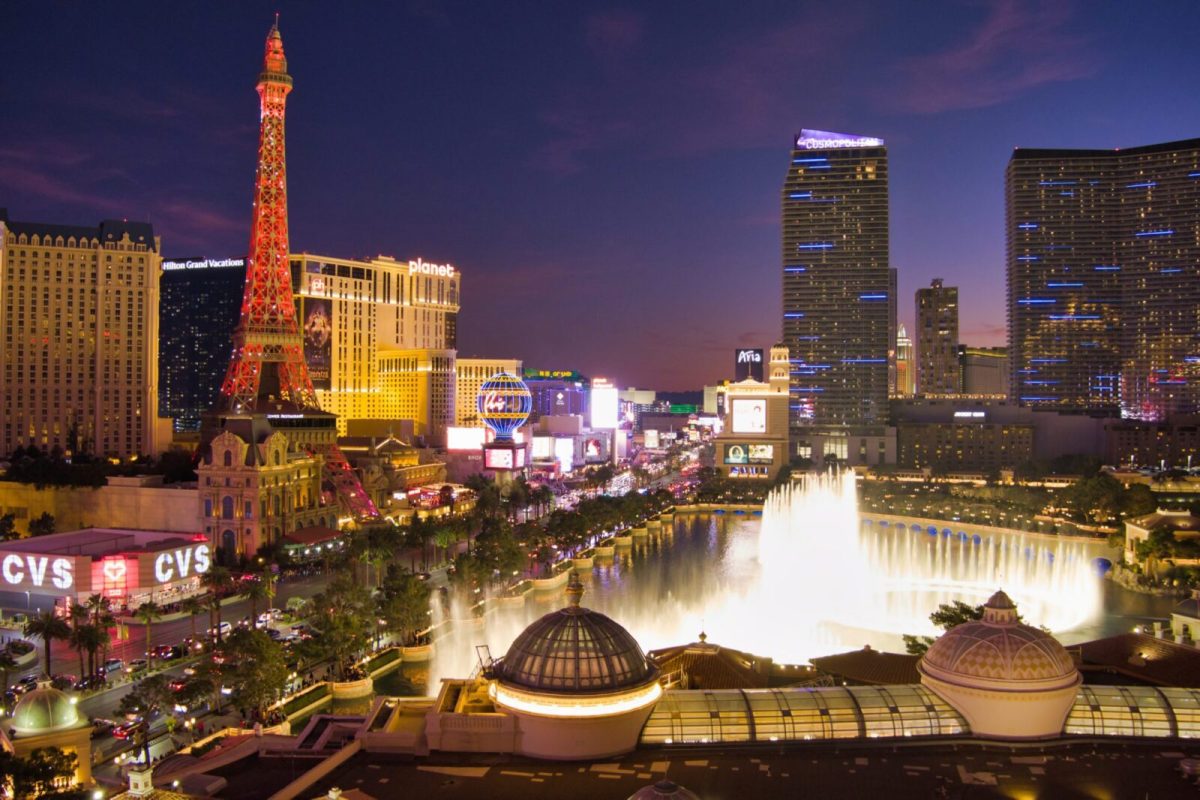
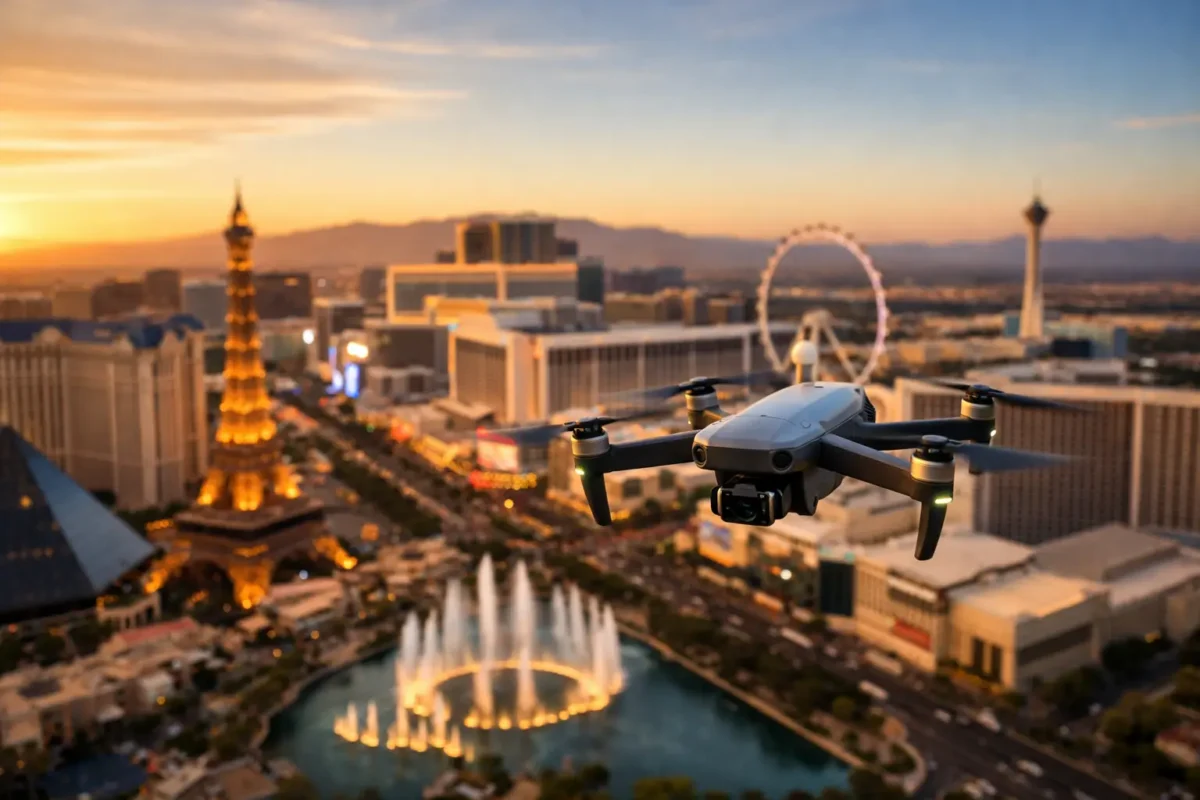
The 4.2-mile stretch of South Las Vegas Boulevard features some of the world’s most famous architectural designs. Aerial views highlight iconic structures like the Bellagio Fountains, the High Roller Observation Wheel, and the Stratosphere Tower, capturing the city’s electric energy and dynamic skyline.
2. Red Rock Canyon & Natural Desert Vistas
Just minutes west of the city lies Red Rock Canyon National Conservation Area. The striking contrast between vivid red sandstone formations and the surrounding Mojave Desert provides a breathtaking, natural backdrop for commercial films, personal projects, and landscape photography.
3. Downtown & Fremont Street
Old Las Vegas blends historic vintage neon with modern urban developments. Capturing Fremont Street from above offers a unique view of the historic heart of the entertainment capital.
Navigating Las Vegas Drone Regulations & Safety
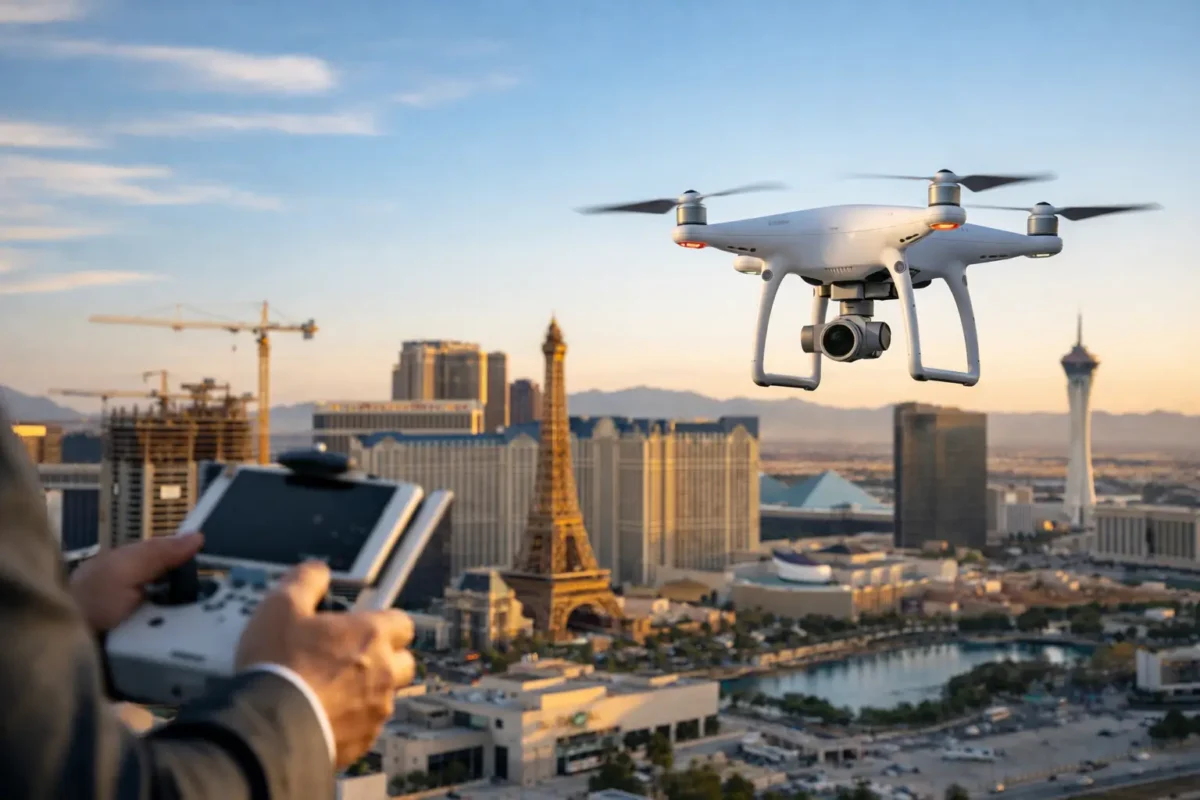
Operating a drone in Las Vegas requires strict adherence to Federal Aviation Administration (FAA) rules and local ordinances, given the crowded airspace and nearby airports.
Key Compliance Requirements
-
FAA Part 107 Certification: Any commercial drone operation—including real estate marketing or monetized media—requires a certified Part 107 Remote Pilot.
-
Class B Airspace & LAANC Approval: Much of the Las Vegas Strip sits directly within Harry Reid International Airport’s Class B airspace. Pilots must secure LAANC (Low Altitude Authorization and Notification Capability) approvals or official FAA waivers prior to taking off.
-
No-Fly Zones & TFRs: Drones are strictly prohibited inside the stadium, Temporary Flight Restrictions (TFRs) during major sports games or concerts at Allegiant Stadium and T-Mobile Arena. Flight in municipal or national park lands without proper permits is also restricted.
-
Remote ID Compliance: All drones weighing over 0.55 lbs must broadcast operational data via FAA-approved Remote ID modules.
Best Practices for Shooting Aerial Photography in Las Vegas
-
Golden Hour Lighting: Schedule flights around sunrise or sunset. The warm, low-angle light softens desert shadows and accentuates the warm tones of the surrounding mountain ranges.
-
Night Shooting & Long Exposures: Capture the famous neon glow of the Strip by using tripod modes, wide-aperture settings, and long shutter speeds for dramatic light trails.
-
Pre-Flight Planning: Utilize airspace apps (such as Air Control or AutoPylot) to verify active airspace clearances, weather hazards, and local flight boundaries before launching.
Commercial Applications for Las Vegas Drone Media
-
Real Estate & Development: Highlighting lot boundaries, architectural highlights, neighborhood proximity, and rooftop amenities to accelerate property sales.
-
Tourism & Hospitality: Showcasing luxury resorts, outdoor recreation, and event venues to attract visitors worldwide.
-
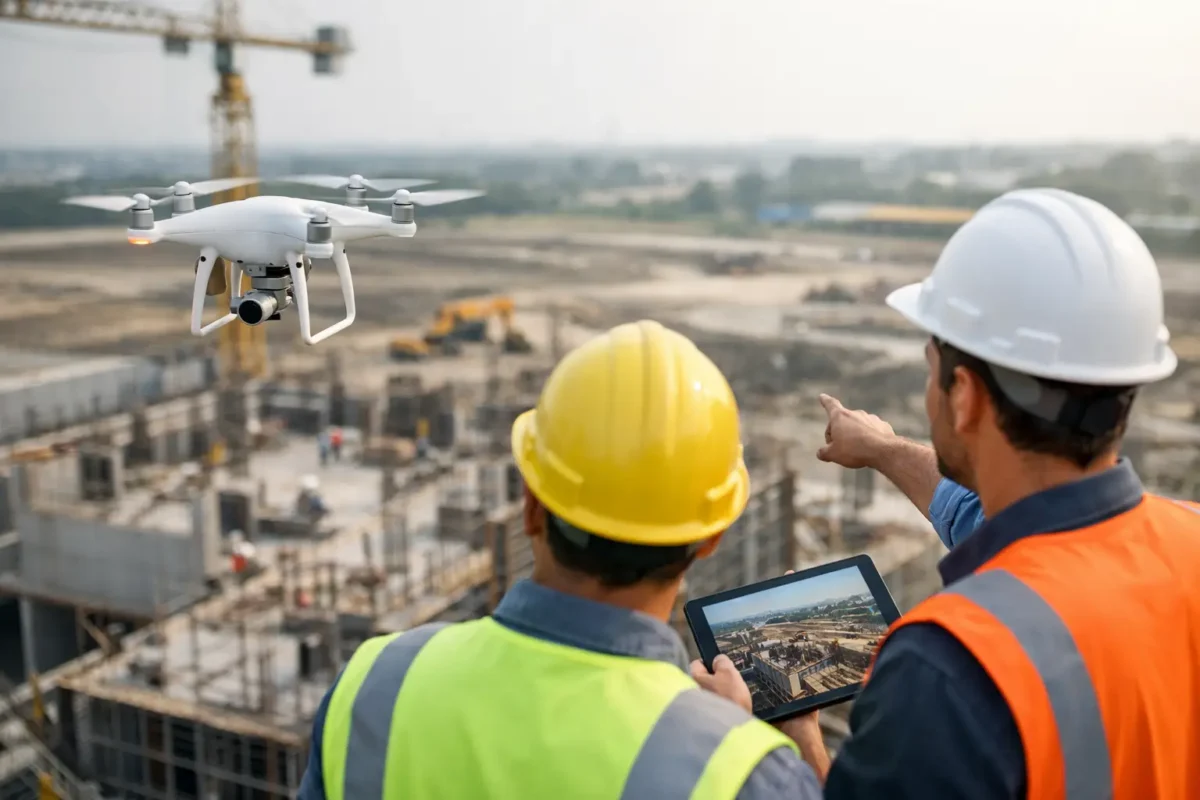
Construction & Site Monitoring: Providing recurring progress photos, volumetric tracking, and site inspections for developers and engineers.
Frequently Asked Questions
Can anyone fly a drone on the Las Vegas Strip?
Recreational and commercial drone flights near the Strip are heavily regulated due to Class B airspace surrounding Harry Reid International Airport. Pilots must obtain proper LAANC authorization from the FAA before flying.
Do I need a license to take commercial drone photos in Nevada?
Yes. Flying a drone for any business-related purpose in Nevada requires an FAA Part 107 Remote Pilot Certificate.
What is the best time of day for drone photos in Las Vegas?
Sunrise and sunset (“golden hour”) offer optimal lighting conditions for desert landscapes and architecture. For capturing resort lights, civil twilight and nighttime flights produce the best contrast.
Elevate Your Visuals with Professional Drone Services
Looking to showcase your property, event, or project with high-resolution aerial media? Partner with certified aerial photography specialists in Las Vegas to capture stunning, fully compliant drone imagery today.
Popular Posts
August 13, 2026
August 12, 2026
August 11, 2026
August 09, 2026
August 09, 2026
August 08, 2026
Comments are closed.