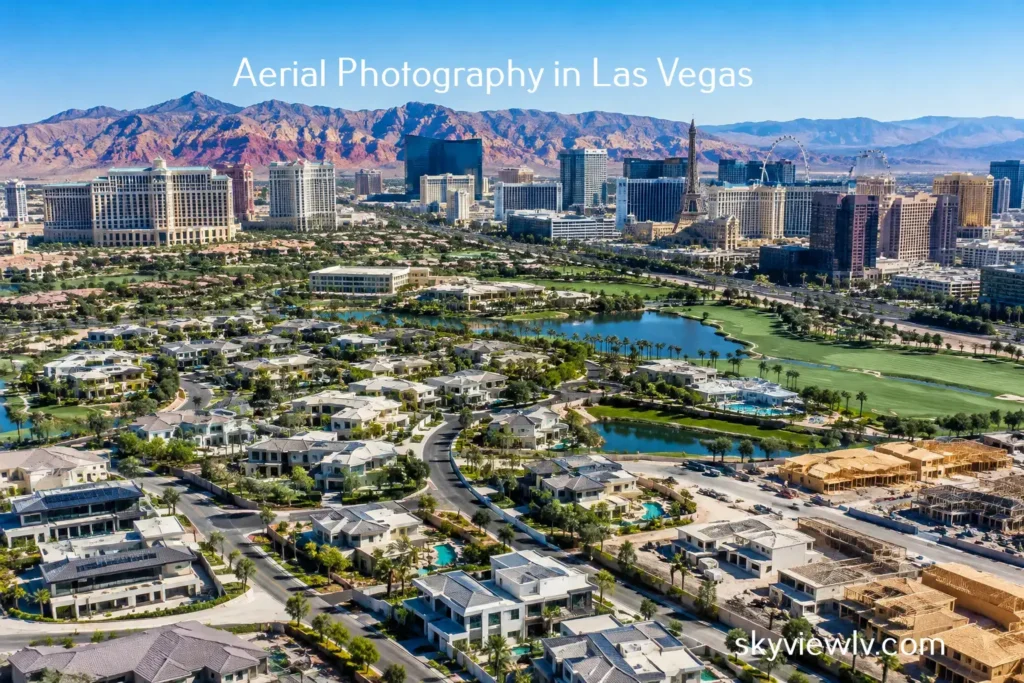
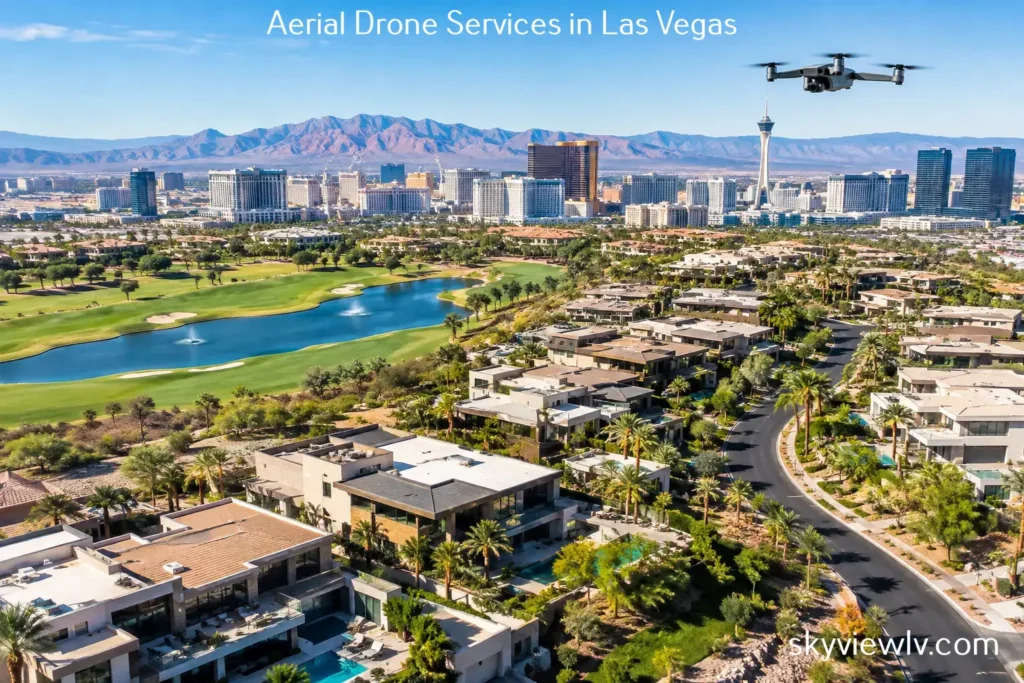
A property can have every desirable feature on paper and still fail to register online. Aerial imagery changes that equation by showing what ground-level photos cannot: lot scale, access points, nearby amenities, views, development progress, and the relationship between a property and its surroundings. A freelance drone operator in Las Vegas can turn those details into visual assets that help buyers, tenants, investors, and project stakeholders understand the opportunity faster.
For real estate and commercial teams, however, the right choice is not simply the person with a drone and a camera. Las Vegas has visually demanding properties, intense sun, fast-moving schedules, and complex aviation considerations. Professional aerial production requires flight planning, legal compliance, an eye for marketing, and reliable post-production.
When Aerial Media Earns Its Place in the Project
Drone photography is most valuable when location and context influence the decision. A luxury home may need to show its backyard, pool, mountain views, golf access, or proximity to the Strip without making the listing feel crowded. A land parcel needs a wider story: roads, adjacent development, utilities, terrain, and nearby growth corridors. A commercial property may benefit from a clear view of parking, ingress and egress, rooflines, signage visibility, and surrounding traffic patterns.
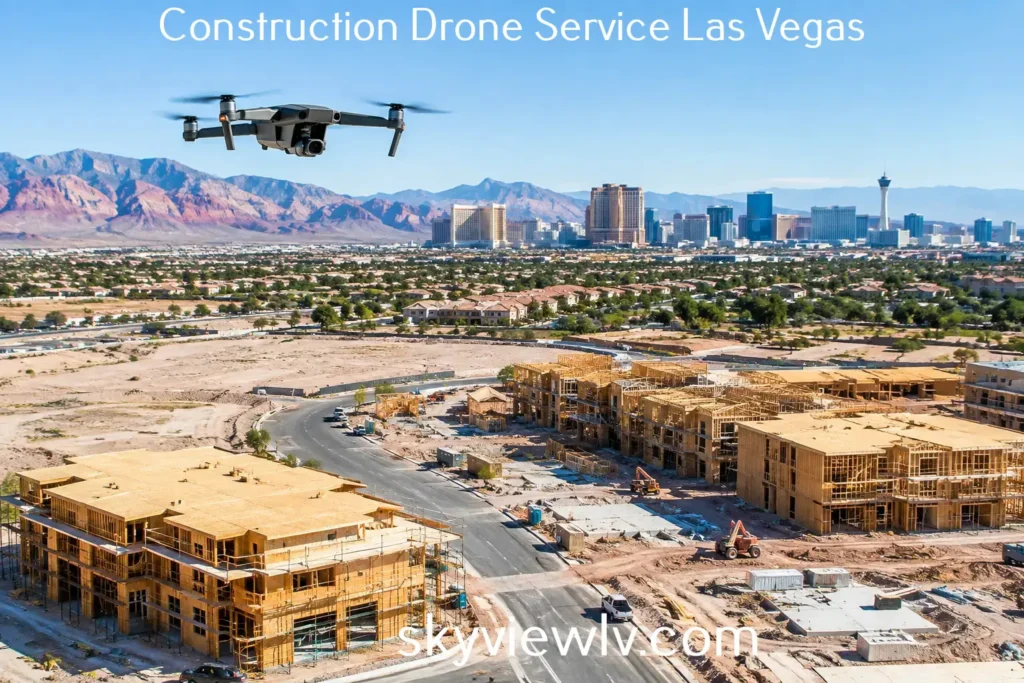
Construction teams use aerial imagery differently. Regular overhead captures can document milestones, provide a consistent visual record for owners and investors, and reveal site conditions that are difficult to communicate from the ground. Developers can use cinematic video and panoramic views to help stakeholders visualize a project before it reaches its final form.
The trade-off is simple: aerial media should clarify the asset, not become a decorative add-on. A few purposeful images can outperform a long sequence of similar overhead shots. The best flight plan is shaped by the question the audience needs answered.
What a Freelance Drone Operator in Las Vegas Should Handle
Hiring an operator should remove work from your team, not create a new layer of coordination. A professional begins by understanding the property, the intended audience, the deliverables, the timeline, and any unique visual priorities. From there, the operator should manage the operational details that protect the shoot and the final product.
For commercial work, this includes FAA-certified flight operations, airspace review, weather checks, site coordination, equipment preparation, and a plan to obtain any required authorization. Much of the Las Vegas Valley sits near controlled or sensitive airspace, including areas influenced by Harry Reid International Airport and Nellis Air Force Base. A location that looks straightforward on a map may require additional planning, timing adjustments, or flight restrictions.
No responsible operator should promise a flight before evaluating the site and current airspace conditions. Authorization can depend on the exact location, altitude, operational needs, and temporary restrictions in effect on the day. That diligence is not a delay tactic. It is how professional crews avoid preventable cancellations, unsafe flights, and regulatory exposure for the client.
Insurance matters for the same reason. Ask whether the operator carries appropriate commercial liability coverage and can provide documentation when a property owner, broker, general contractor, or site manager requires it. For higher-risk locations or larger commercial assignments, coverage requirements may be more substantial than a typical residential shoot.
Look Beyond the Drone and Camera
Modern drones can capture sharp footage, but equipment alone does not create useful marketing. The difference is often visible in framing and restraint. An experienced aerial operator knows how to establish the property in its larger setting, then move closer to the features that support the sales story.
For a residential listing, that may mean a clean elevated still that shows the home on its lot, followed by angles that make the pool, outdoor kitchen, view corridor, or community amenities immediately legible. For industrial or retail property, the strongest images may focus on access, loading areas, parking capacity, neighboring anchors, and the building’s place within a commercial corridor.
Video needs the same discipline. Slow, controlled movements and intentional sequencing create a polished result. Fast passes and dramatic maneuvers can be appropriate for certain hospitality, entertainment, or lifestyle projects, but they are not automatically right for a property listing or investor presentation. The footage should feel premium while allowing the viewer to absorb the location.
Post-production is equally important. Color should look natural, vertical lines should be corrected when needed, and edits should fit the final destination. A 30- to 60-second listing video for social media calls for a different pacing and format than a longer development presentation or a construction progress archive. Clarify whether you need edited video, high-resolution stills, raw files, vertical clips, 360-degree photo spheres, or a combination before the shoot is scheduled.
Questions That Protect Your Timeline and Budget
A lower quoted price can be attractive, especially for a single listing. Yet an incomplete quote often leaves out the work that makes the assignment usable: airspace coordination, editing, revisions, travel, expedited delivery, or additional insurance. Comparing operators by price alone can lead to surprise costs or content that does not match the campaign.
Start with the scope. Explain how the assets will be used and what must be visible. If a broker needs five hero images for a listing launch, that is different from a developer who needs a recurring monthly construction flight with consistent camera positions. If a landowner needs to show acreage and nearby access, discuss the boundaries and the key surrounding landmarks in advance.
Ask about the expected delivery timeline, file types, image quantity, editing approach, weather policy, insurance, and airspace process. It also helps to confirm who will grant site access and whether there are safety rules, tenant notices, active equipment, or restricted areas to consider. Clear communication before flight day keeps the process efficient.
A free consultation is valuable when the project has variables. It gives the operator a chance to recommend the appropriate deliverables rather than selling a one-size-fits-all package. It gives you a realistic view of what is possible at that specific location.
Timing Changes the Quality of the Capture
Las Vegas light can be both an advantage and a challenge. Clear skies produce crisp views and strong contrast, but midday sun can flatten facades, deepen shadows, and make exterior spaces feel harsh. Early morning and late afternoon often create more dimension, warmer color, and a more inviting sense of place.
That does not mean every project should be filmed at sunset. Construction documentation often benefits more from consistent time-of-day captures than from dramatic light. Commercial sites may need to be photographed when parking and access patterns are visible. A property with west-facing views may require a different plan than one that is best seen in morning light.
Wind also deserves attention. Desert conditions can change quickly, and safe flight decisions take priority over an ideal schedule. A qualified operator will monitor conditions and recommend rescheduling when necessary, rather than forcing a marginal flight. That protects people, property, and the quality of the finished work.
Build Aerial Assets Around the Buyer Journey
The strongest drone content works with your existing marketing, not apart from it. Pair aerial stills with professional interior photography so viewers can move naturally from the neighborhood and lot to the home’s details. Use a short aerial video as the opening asset in a listing campaign, then repurpose individual clips for social posts, email campaigns, and investor updates.
For commercial and development projects, aerial media can make complex information easier to communicate. A current flyover may show site progress, while carefully selected images can support leasing materials, capital presentations, entitlement discussions, or stakeholder reporting. When recurring documentation is needed, use established flight positions and angles. Consistency makes change visible and creates a more credible visual record over time.
Sky View LV approaches each assignment as both a flight operation and a marketing deliverable. FAA-certified pilots, commercial insurance options, and experience with sensitive local airspace help clients focus on the property story rather than the logistics behind the capture.
Choose Certainty, Not Just Content
Aerial imagery is often the first moment a prospect understands why a property matters. That makes the operator’s role bigger than collecting footage from above. The right professional brings a plan, respects the site, works within applicable flight requirements, and delivers ready-to-use files.
Before your next listing launch, site update, or investment presentation, identify the one perspective that would make the opportunity clearer from the air. Start there. A well-planned aerial capture can turn a glance into genuine interest and give your audience a reason to keep looking.