Mastering High-Resolution & Aerial Photography in Las Vegas
High-resolution photography in Las Vegas captures the city’s vibrant energy and dramatic landscapes with unparalleled clarity. From the dazzling neon lights of the Strip to the rugged beauty of the surrounding desert, photographers can leverage specialized gear and creative techniques to produce striking imagery.
Whether you are shooting from the ground, a rooftop, or the air, this guide covers the essential strategies, tools, and perspectives needed to elevate your visual storytelling in Southern Nevada.
Key Takeaways
-
Detail-Driven Urban Photography: Highlighting intricate architectural elements and vibrant light setups gives cityscapes narrative depth.
-
Essential Equipment: High-megapixel sensors, sturdy tripods, and polarizing filters are critical for tack-sharp clarity.
-
Strategic Lighting: Mastering low-light shooting, shutter speed, and white balance is key to capturing the energy of the Las Vegas Strip at night.
-
Aerial Perspectives: Drones and helicopter tours unlock unique bird’s-eye views, provided you comply with airspace and local regulations.
-
Natural Contrast: Nearby natural landmarks, such as Red Rock Canyon, offer a striking visual contrast to the urban neon.
Capturing the Essence of Las Vegas in High Resolution
High-resolution photography is all about preserving intricate details. Las Vegas features a rare visual combination of dense urban architecture, bright neon illumination, and surrounding desert vistas.
The Power of Detail in Cityscapes
Focusing on finer details elevates a standard city photo into a compelling visual narrative:
-
Architectural Precision: High-resolution sensors capture the textures and vibrant hues of iconic resorts, allowing viewers to appreciate complex designs.
-
Cultural Storytelling: Framing smaller, nuanced details reveals the city’s unique character beyond broad skyline shots.
-
Creative Compositions: Zooming in on subtle patterns, reflections, and light arrays produces abstract, innovative visual outcomes.
Techniques for Sharper, Cleaner Shots
To maximize depth and resolution:
-
Use a Heavy-Duty Tripod: Essential for stabilizing long exposures and low-light night shots.
-
Optimize Your Aperture: Shoot at the lens’s sweet spot (typically f/8 to f/11) to maximize sharpness across the entire depth of field.
-
Shoot in RAW Format: RAW files preserve uncompressed image data, providing maximum dynamic range for post-processing.
Gear Requirements for High-Resolution Photography
| Equipment | Core Purpose | Best Use Case in Las Vegas |
|---|---|---|
| High-Megapixel Camera Body | Captures fine details and allows for tight cropping | Skyline panoramas & large-format prints |
| Wide-Angle & Telephoto Lenses | Delivers diverse framing options | Wide resort vistas vs. distant architecture |
| Polarizing Filters | Reduces glare and boosts color saturation | Sunny daytime shoots in the desert |
| Carbon-Fiber Tripod | Eliminates camera shake during exposures | Nighttime Strip shooting & blue hour |
Unique Perspectives on the Las Vegas Strip
Rooftop Photography: Angles & Safety
Rooftop vantage points offer dynamic views over the Strip, but they require careful planning:
-
Access & Approvals: Many elevated locations are private property; secure permission before shooting.
-
Safety Protocol: Prioritize safety near ledges and keep gear secured.
-
Golden Hour Timing: Schedule shoots around sunrise or sunset for balanced exposure between the sky and city lights.
Lesser-Known Vantage Points
Skip the crowded footbridges and explore alternative angles:
-
Local Parks: Select elevated parks across the valley offer sweeping views of the entire skyline.
-
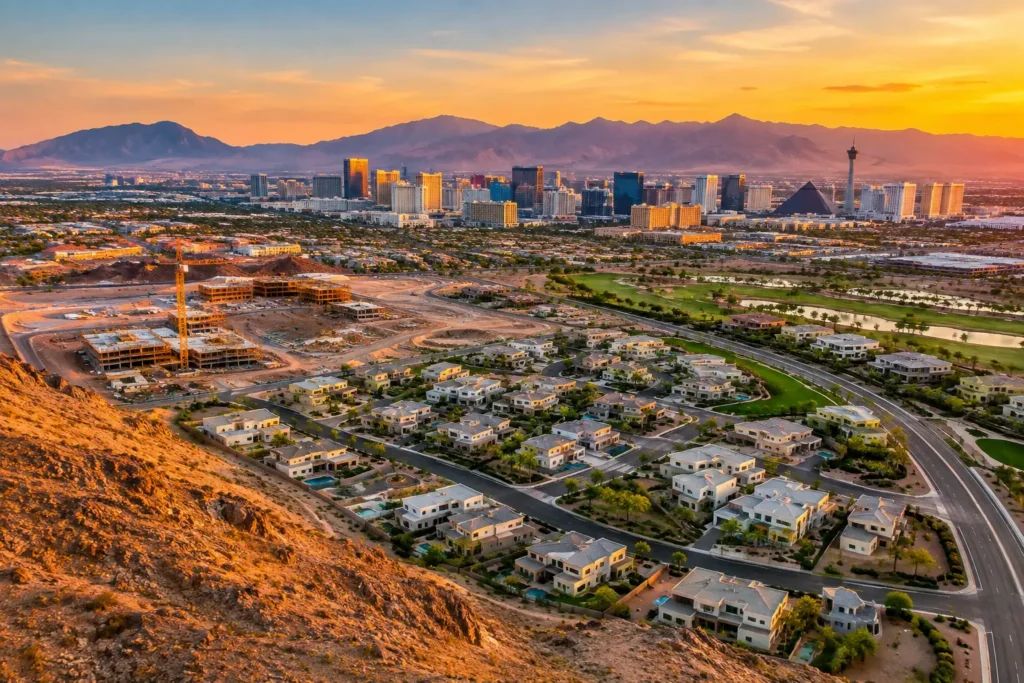
Frenchman Mountain: Provides an expansive, wide-angle view of the Las Vegas valley from the east.
-
Boutique Hotel Decks: Certain mid-rise or off-Strip properties feature accessible balconies with unique angles.
Mastering Night Photography on the Strip
-
Stabilize for Long Exposures: Use a tripod and exposure delay/remote trigger to eliminate shutter-button shake.
-
Experiment with Shutter Speed: Slower shutter speeds (2–5 seconds) transform passing vehicle traffic into smooth light trails.
-
Manual White Balance: Adjusting color temperature (around 3200K–4000K) helps prevent neon lights from blowing out into unnatural color casts.
The Allure of Aerial Photography
Helicopter Tours
Helicopter flights offer a thrilling, dynamic perspective over the Strip, allowing photographers to capture sweeping, distortion-free vistas from above.
Drone Photography
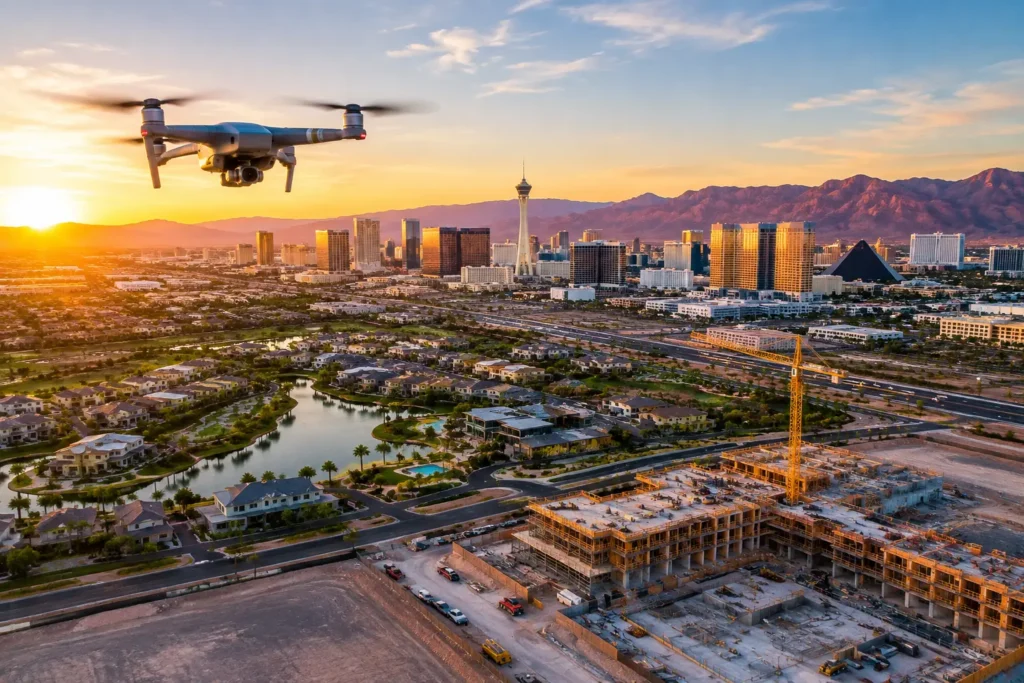
Unmanned Aerial Vehicles (UAVs) have revolutionized urban photography by offering flexible heights and precise framing.
-
Dynamic Heights: Reach perspective levels unattainable from the ground or static rooftops.
-
Expanded Coverage: Quickly cover vast resort grounds, desert terrain, and architectural layouts.
Regulatory Note: Commercial drone pilots operating in Las Vegas must hold an FAA Part 107 certificate, obtain necessary LAANC airspace authorizations (due to nearby airport Class B airspace), and strictly observe local city, state, and private property flight restrictions.
Natural Landscapes Surrounding Las Vegas
Venture outside city limits to capture dramatic desert scenery that balances the urban environment.
Frenchman Mountain
A challenging hike east of the city that offers panoramic views of the entire valley.
-
Tip: Shoot early in the morning to avoid midday heat haze and atmospheric dust.
Red Rock Canyon
Famous for its towering red sandstone formations and desert flora.
-
Timing: Plan for sunrise to catch warm, directional light hitting the canyon walls.
-
Composition: Frame native desert plants in the foreground with towering rock faces in the background.
Weather Effects & How to Handle Them
| Weather Condition | Visual Impact | Recommended Mitigation Strategy |
|---|---|---|
| Stormy Skies | Adds mood, drama, and high visual contrast | Use a sturdy tripod, lock the ISO low, and watch for lightning safety |
| Heat Haze | Distorts distant subjects and reduces clarity | Shoot in the early morning or use longer focal lengths selectively |
| Golden Hour | Produces warm, soft, low-angle light | Scout locations in advance and execute shots quickly as light shifts |
Post-Processing Techniques
Editing is essential for refining high-resolution raw imagery:
-
Software Selection: Use industry-standard raw editors such as Adobe Lightroom, Photoshop, or Capture One for maximum control over fine details.
-
Color Correction: Adjust white balance to restore accurate skin tones and architectural hues while preserving the vibrant glow of neon signs.
-
Panorama Stitching: Overlap photos by 30%–40% when capturing panoramic sweeps to ensure seamless software stitching.
Pitfalls to Avoid: Watch for clipped (blown-out) highlights in bright neon signs, excessive digital noise in shadow areas, and minor motion blur in low light.
The Future of High-Resolution Photography
-
AI Enhancement: Advanced AI noise-reduction and sharpening algorithms enable cleaner handheld shots in low light.
-
Story-Driven Urban Trends: High-resolution visuals are shifting toward narrative-driven street and architectural documentary work.
-
Social Sharing: Optimized high-resolution imagery drives higher engagement across visual platforms, giving photographers global reach.
Summary
Capturing Las Vegas in high resolution requires a balance of technical execution, proper gear selection, and environmental awareness. By combining crisp ground shots, strategic night exposures, and authorized aerial perspectives, you can showcase both the energetic pulse of the Strip and the quiet majesty of the surrounding desert.