The Use of Drones in Construction
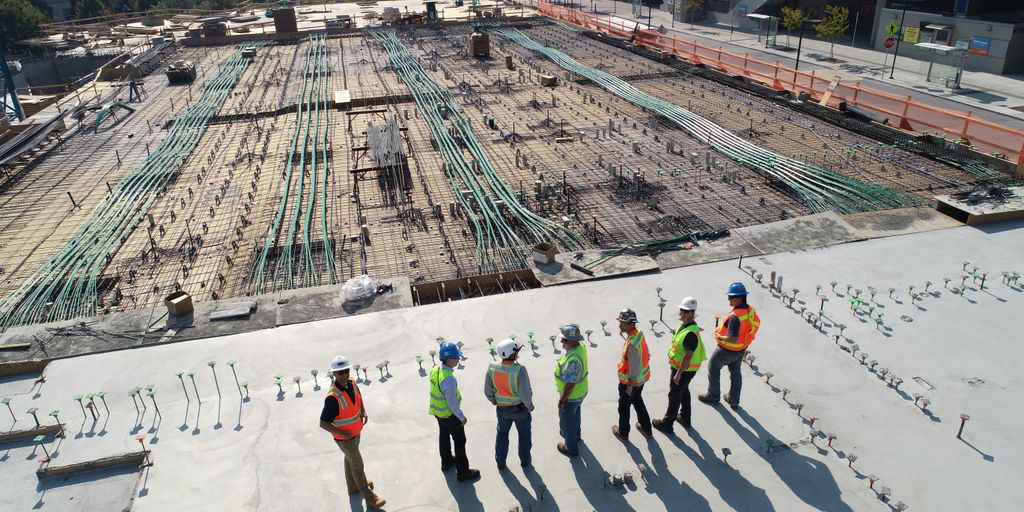
The Use of Drones in Construction. Drones, also known as Unmanned Aerial Vehicles (UAVs), are making a significant impact in the construction industry. They are used in many ways, from mapping land to assessing job-site safety. This technology enables construction companies to operate more efficiently and reduce costs. This article will examine how drones are transforming the construction industry and shaping the future of this innovative technology.
Key Takeaways
- Drones are used for land surveys, equipment monitoring, and safety checks in the Construction Industry.
- They help accelerate projects and reduce costs by providing quick, accurate data.
- Drones improve worker safety by identifying hazards and allowing remote monitoring.
- They can perform detailed inspections, even in hard-to-reach places.
- The future of drones in Construction includes AI integration, tech advancements, and new regulations.
Applications of Drones in Construction

Drones in Construction have become essential tools, adding value at every stage of a project. Their ability to capture high-quality data and provide aerial views has made them indispensable. Key benefits of drones in the construction industry include enhanced site surveying, accurate topographic data, efficient land surveys, improved safety measures, cost reduction, and advanced project monitoring and reporting.
Impact of Drones on Construction Efficiency

Drones have significantly transformed the construction industry, enabling projects to be completed more quickly and efficiently. Their ability to quickly map and measure sites helps reduce project timelines. Drones can also quickly consolidate data into reports, accelerating decision-making.
Reducing Project Timelines
Drones can quickly map and measure sites, reducing project timelines. They can also promptly consolidate data into reports, accelerating decision-making.
Cost Savings
Using drones can lead to substantial cost savings. They reduce the need for manual labor and expensive equipment. Additionally, drones can identify issues early, preventing costly mistakes.
Improving Data Accuracy
Drones provide high-quality data that improves the accuracy of construction projects. This data enables better planning and execution, resulting in more successful outcomes.
Drones are revolutionizing the industry by increasing efficiency and improving overall project outcomes.
Enhancing Worker Safety with Drones
Drones are revolutionizing the way construction sites manage safety. They offer a proactive safety management approach, allowing safety officers to monitor sites for ongoing and potential problems without putting themselves at risk.
Real-Time Hazard Identification
Drones can quickly fly over a site to check for hazards, such as equipment in unsafe areas or unauthorized individuals. This real-time information helps prevent accidents and theft, saving companies thousands of dollars.
Remote Site Monitoring
Using drones, safety officers can inspect hard-to-reach areas without ladders or scaffolding. This reduces the risk of falls, a leading cause of fatalities in the Construction Industry. Drones can also conduct OSHA inspections, capturing real-time data without putting workers at risk.
Emergency Response
In emergencies, drones can provide a quick overview of the situation, enabling efficient coordination of response efforts. They can identify hazards and monitor equipment for overheating, ensuring a safer environment for all workers.
Structural Inspections Using Drones

Drones have revolutionized structural inspections in the construction industry. They offer a safer, faster, and more detailed method for examining buildings and infrastructure.
High-Resolution Imaging
Drones equipped with high-resolution cameras can capture detailed images of structures. These images help identify cracks, leaks, or other structural issues that might not be visible from the ground. This level of detail ensures that any potential problems are caught early, maintaining the structure’s safety and integrity.
Accessing Hard-to-Reach Areas
One significant advantage of using drones is their ability to access areas that are difficult to reach. Traditional methods might require scaffolding or heavy machinery, but drones can easily navigate between structures to check their stability. This not only saves time but also reduces the risk to personnel.
Regular Maintenance Checks
Building owners can detect potential issues early by conducting regular drone inspections and planning for necessary maintenance. This proactive approach extends the structure’s lifespan and reduces operational costs. Drones can also be equipped with thermal sensors to identify heat leaks, electrical issues, and cold spots, enabling comprehensive analysis of the building’s condition.
Drones can easily access hard-to-reach areas, making inspections faster, easier, safer, and more detailed.
Future Trends in Construction Drones
Integration with AI and Machine Learning
With the integration of AI and machine learning, drones are becoming increasingly intelligent. These technologies enable drones to process data more quickly and accurately, improving decision-making on construction sites. For example, AI can help identify potential issues before they become big problems.
Advancements in Drone Technology
The technology behind drones is constantly improving. New models are emerging with longer battery life and improved cameras. These advancements make drones even more helpful for construction tasks. Imagine drones that can operate for longer hours and capture more detailed images.
Regulatory Developments
As drones become more common, governments are creating new rules to manage their use. These regulations aim to make drone operations safer and more efficient. While there are still some hurdles to overcome, the future looks bright for the rise of construction drone services.
The construction industry is evolving with the help of drones. They are not just tools but are innovating architecture and construction methods.
In summary, the future of drones in Construction is exciting. With advancements in technology and increasingly intelligent systems, drones will continue to revolutionize construction monitoring, offering precision and safety.
Challenges and Limitations of Drones in Construction

While drones offer many benefits in Construction, they also have several challenges and limitations. Understanding these drawbacks is crucial for effective implementation.
Regulatory Hurdles
Operating drones at construction sites often requires navigating complex legal frameworks. This includes obtaining necessary permits and ensuring compliance with local and national regulations. The paperwork can be time-consuming and may delay project timelines.
Technical Limitations
Drones are subject to various technical constraints. Limited flight time, weather restrictions, and data accuracy issues can hinder their effectiveness. For instance, drones may not perform well in adverse weather conditions, which can affect their reliability.
Privacy Concerns
The use of drones raises significant privacy concerns. Construction sites are often located near residential areas, and drones equipped with cameras can inadvertently capture images of private property, potentially leading to legal disputes.
Despite these challenges, the benefits of using drones in construction often outweigh the drawbacks, making them a valuable tool when used responsibly.
Conclusion
In conclusion, drones have genuinely transformed the construction industry. They are now essential tools for land surveying and equipment tracking. Drones make construction work faster, safer, and cheaper. They enable workers to view the entire site from above, identify problems early, and make more informed decisions. As technology improves, drones will become even more critical in Construction. Companies that utilize drones will have a competitive edge over those that don’t. Embracing drone technology is not just a trend; it’s the future of Construction.
Frequently Asked Questions
What are drones used for in Construction?
Drones are used in Construction for tasks such as land surveys, equipment monitoring, safety inspections, and high-resolution site imaging.
How are drones changing the construction industry?
Drones are accelerating and improving construction projects. They help reduce project timelines, save costs, and improve data accuracy.
How do drones improve safety on construction sites?
Drones improve safety by identifying hazards in real time, remotely monitoring sites, and assisting with emergency response.
Can drones access hard-to-reach areas in Construction?
Yes, drones can easily access hard-to-reach areas, making inspections and maintenance of structures easier while minimizing the risk to workers.
What future trends can we anticipate in the construction drone industry?
Future trends include the integration of AI and machine learning, advances in drone technology, and evolving regulations.
What are the challenges of using drones in Construction?
Some challenges include regulatory hurdles, technical limitations, and privacy concerns.
Popular Posts
February 11, 2026

February 11, 2026

January 23, 2026

January 22, 2026
November 14, 2025

November 04, 2025
Comments are closed.