Drone Insurance Requirements for Nevada Flights
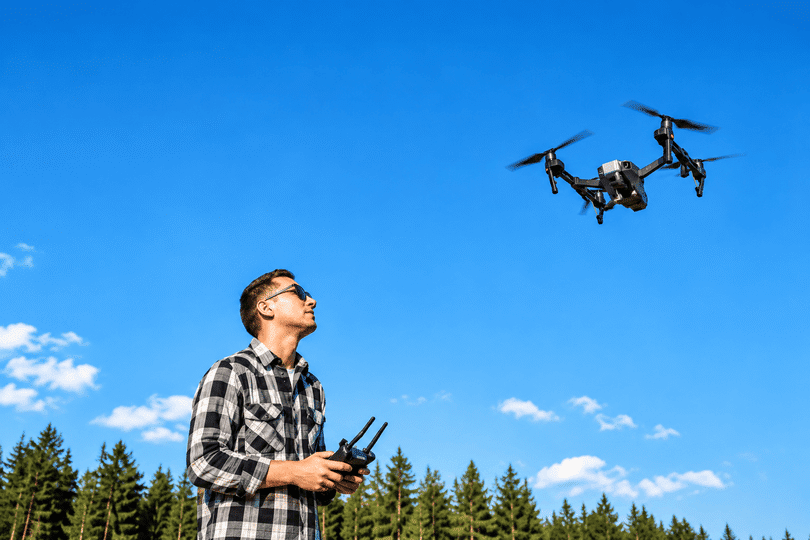
Aerial footage can make a hillside lot, a commercial roofline, or a new development’s location instantly easier to understand. But before a drone lifts off, drone insurance requirements need to be clear, especially when the work involves valuable property, active construction sites, client deadlines, or controlled airspace in Las Vegas.
For real estate agents, developers, property managers, and construction teams, insurance is more than a vendor checkbox. It is proof that the aerial production company has planned for the risks of commercial flight and can meet the standards of sophisticated clients, owners, and job sites.
Are Drone Insurance Requirements Set by the FAA?
For most commercial drone operations, the FAA does not impose a blanket federal insurance requirement under Part 107. A pilot must hold the appropriate Remote Pilot Certificate, follow operating rules, register qualifying aircraft, and secure airspace authorization when required. Insurance is a separate issue.
That distinction matters. FAA certification and airspace approval demonstrate that a flight is being conducted under federal aviation rules. They do not pay for property damage, bodily injury, or a client’s financial loss if something goes wrong.
In practice, drone insurance requirements usually come from the people and places involved in the project. A commercial property owner may require a certificate of insurance before granting site access. A construction manager may specify minimum liability limits in the subcontractor agreement. A broker or developer may want confirmation that the operator carries coverage appropriate to the assignment.
Some venues, municipalities, property owners, and event organizers also establish their own requirements. The right answer is therefore not one universal policy limit. It depends on the aircraft, flight environment, contract, property value, nearby people, and the client’s risk-management standards.
The Coverage Commercial Drone Clients Should Expect
A professional aerial imaging provider should be prepared to explain what its policy covers, how much coverage is available, and whether the documentation can meet the project’s contract terms. The following coverages are the most relevant for commercial drone work.
Aviation liability coverage
Liability insurance is the foundation of a commercial drone policy. It may respond to third-party bodily injury or property damage arising from drone operations. If an aircraft damages a parked vehicle, strikes building equipment, or causes an injury, this is the coverage a client will expect the operator to carry.
For lower-risk real estate photography, $1 million in liability coverage is a common starting point. That may be sufficient for a straightforward residential listing in an open area, but it is not automatically appropriate for every project. A busy commercial corridor, a high-value development, an industrial site, or a flight near people and traffic may call for higher limits.
Sky View LV maintains insurance coverage ranging from $1 million to $10 million, allowing coverage limits to align with the assignment rather than forcing every client into the same one-size-fits-all arrangement.
Hull coverage for the drone and equipment
Hull coverage protects the operator’s aircraft and, depending on the policy, related equipment such as cameras, sensors, controllers, and ground stations. This coverage primarily protects the production company rather than the client, but it still signals operational maturity.
A pilot whose equipment is damaged should have a plan to recover without delaying a major listing launch, progress report, or investor presentation. For clients, that means a more dependable production schedule and less exposure to a single equipment failure.
Non-owned drone coverage
Not every operator flies equipment they own. Some productions use rented aircraft, specialized sensors, or client-provided equipment. Non-owned aircraft coverage can be relevant in those situations.
This is worth discussing when a project requires thermal imaging, large-format cinema equipment, or a specialty aircraft outside a provider’s normal fleet. The client should know who is responsible for the equipment and whether the policy covers the planned use.
Additional insured status and certificates of insurance
Many commercial clients require a certificate of insurance, often called a COI, before work begins. The certificate identifies the insured company, policy period, carrier, and policy limits. It gives the client a fast way to verify that the required coverage is active.
A contract may also request that the client, property owner, general contractor, or property manager be named as an additional insured. This is not a casual request. It changes how the policy may extend protection to the named party for liability connected to the operator’s work. The language should match the contract and be reviewed by the operator’s insurance professional.
Clients sometimes request other terms, such as a waiver of subrogation or primary and noncontributory wording. These are contract-specific insurance conditions, not standard assumptions. Raise them during project planning, not on the morning of the flight.
How Much Drone Liability Coverage Is Enough?
Coverage limits should reflect exposure, not just the lowest number needed to satisfy a form. A quiet residential exterior shoot generally carries a different risk profile than a flight around cranes, crews, occupied retail spaces, or high-value commercial assets.
Consider the environment first. Is the site isolated, or is it surrounded by roads, neighboring buildings, pedestrians, and active operations? Then consider the client’s contractual requirements. Finally, consider what the project stands to lose if an incident interrupts work, damages property, or gives rise to a claim.
A developer documenting a large project may require higher limits because the site has more people, equipment, and contractual parties. A property management company may require consistent limits across all vendors to simplify its risk controls. In those cases, higher limits are not excessive. They are part of doing business on a professional site.
It is also wise to ask whether the policy applies to the specific operations planned. Aerial stills, cinematic video, interior flights, night operations, flights near structures, and specialized payloads can create different underwriting questions. A broad statement that a company is “insured” does not replace confirmation that the coverage supports the actual assignment.
Insurance Does Not Replace Flight Compliance
A well-insured drone operator can still be unauthorized to fly in a particular location. This is especially relevant in Las Vegas, where airspace near Harry Reid International Airport, Nellis AFB, and other restricted or controlled areas requires careful planning.
Professional flight planning begins before the camera setup. The operator reviews airspace, site conditions, weather, NOTAMs, operational limitations, property access, and the intended flight path. When authorization is needed, it must be obtained through the appropriate process before the operation.
Insurance and compliance work together. Insurance manages the financial exposure of an incident. FAA certification, airspace authorization, and disciplined operating procedures reduce the chance of an incident occurring in the first place. Clients should expect both.
Questions to Ask Before Hiring a Drone Provider
Aerial media should improve a property’s presentation, not create uncertainty for the client. Before scheduling a shoot, confirm that the provider can clearly answer practical questions about insurance and compliance.
Request a current certificate of insurance and verify that the limits meet your contract requirements. Ask whether additional insured status can be provided if your company, owner, or general contractor requires it. Confirm that the pilot is FAA-certified and that the provider handles airspace planning and authorization for the planned location.
For construction and commercial projects, ask how the operator coordinates with site safety rules, crew activity, and access requirements. For real estate marketing, ask how the provider evaluates surrounding airspace and whether the requested shots are practical for the property’s location.
You should also clarify who is responsible for securing access to the property and whether neighboring properties, roads, or public areas could affect the flight plan. These conversations are not obstacles to great imagery. They are how an experienced provider protects the schedule, the property, and the finished product.
Build Insurance Into the Project Plan
The best time to discuss drone insurance requirements is when the aerial scope is being planned. Include insurance limits and certificate needs in the initial request for service, especially if a property owner, general contractor, or corporate risk department is involved. That gives the operator time to provide accurate documentation and identify any special endorsements before the shoot date.
For a listing, that preparation keeps marketing on track. For a construction project, it prevents a drone crew from arriving at a gate without the required entry paperwork. For an investment or development presentation, it ensures the visual asset is produced with the same level of professionalism as the rest of the project.
Aerial imaging earns attention because it shows context that ground photography cannot. When insurance, certification, and airspace planning are handled with the same care as the final frame, clients can focus on what the imagery is meant to do: make the property’s opportunity impossible to overlook.
Popular Posts

September 07, 2026
September 06, 2026
September 04, 2026
September 04, 2026
September 03, 2026
September 02, 2026
Comments are closed.