Drone Photography Pilot in Las Vegas
Master the Skies: How to Become a Successful Drone Pilot in Las Vegas
Meta Title: How to Become a Drone Pilot in Las Vegas | Equipment, Rules & Career Guide
Meta Description: Learn how to launch a drone photography career in Las Vegas. Discover FAA Part 107 requirements, top drone gear, local flight locations, and urban airspace rules.
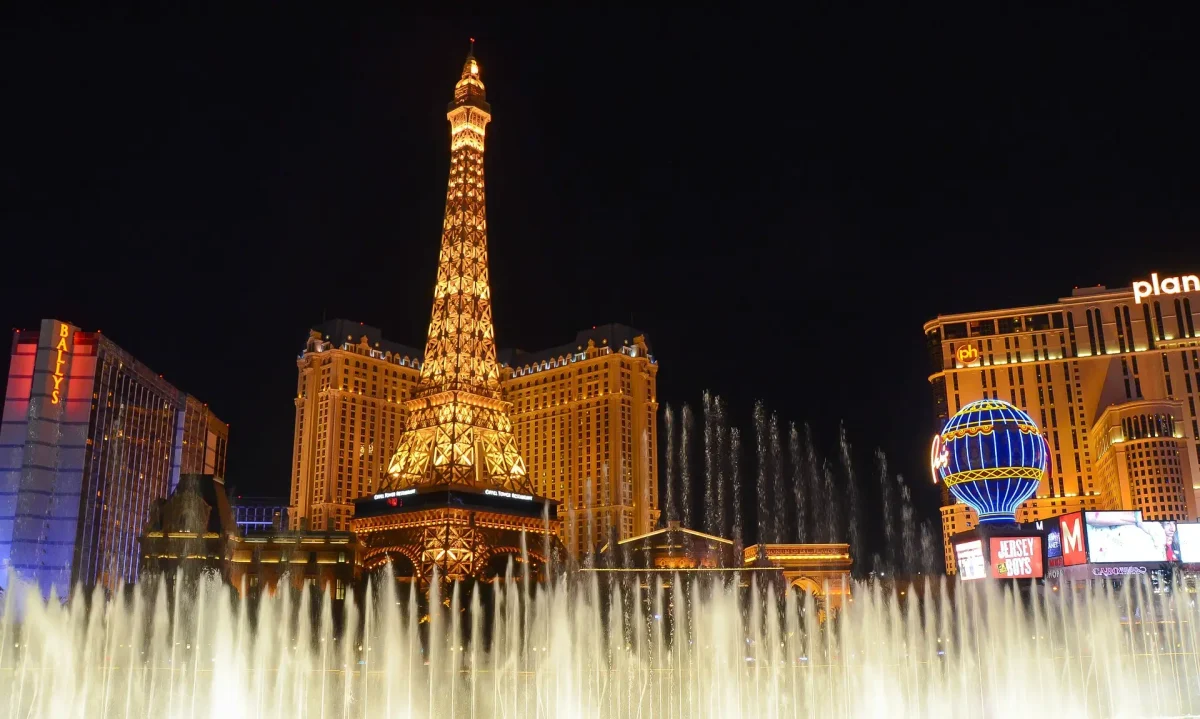
Las Vegas is far more than a city of neon lights and world-class entertainment—it has rapidly emerged as a national hotspot for drone photography. Framed by striking desert landscapes and iconic architecture, the demand for licensed aerial photographers in Southern Nevada is soaring.
Whether you want to capture luxury real estate, film events, or offer commercial inspection services, becoming a professional drone pilot in Las Vegas offers endless opportunities. This guide covers essential skills, equipment recommendations, FAA airspace regulations, and key strategies to build a successful aerial photography business.
Key Takeaways
-
High Commercial Demand: Drone photography is expanding rapidly in Las Vegas real estate, tourism, and media production.
-
FAA Compliance Required: Commercial operations require an FAA Part 107 Remote Pilot Certificate and strict adherence to Class B airspace rules.
-
Gear Selection Matters: Choosing the right drone balances camera resolution, wind resistance, and flight time.
-
Safety First: Flying near the Las Vegas Strip or surrounding public lands requires advance airspace authorization (LAANC) and environmental awareness.
The Rise of Commercial Drone Photography in Las Vegas
Evolution of the Industry
Over the last decade, drone technology has transformed from a niche hobby into an essential visual tool. What began as basic remote-controlled gadgets has evolved into cinema-grade flying cameras capable of delivering incredible 4K footage. Today, aerial visuals are standard across marketing, construction, and entertainment industries in Las Vegas.
Why Las Vegas Businesses Rely on Drones
Drones offer unique visual advantages that ground photography cannot replicate:
-
Dynamic Perspectives: Showcase sweeping resort layouts, wide desert expanses, and high-rise commercial builds from cinematic angles.
-
Cost Efficiency: Drones replace expensive helicopter charters at a fraction of the setup time and cost.
-
Versatility: Lightweight quadcopters easily navigate tight urban spaces and remote desert terrain.
Essential FAA Regulations & Legal Requirements
Flying a drone in Las Vegas comes with strict legal responsibilities due to proximity to major airports and high-density tourist corridors.
1. FAA Registration & Part 107 Certification
-
Registration: Any drone weighing over 0.55 lbs (250 grams) must be registered with the FAA via the FAA DroneZone.
-
Commercial Certification: To earn money with your drone, you must pass the FAA Part 107 Knowledge Test to become a certified Remote Pilot in Command (PIC).
2. Navigating Las Vegas Airspace
Las Vegas features tightly controlled airspace. Harry Reid International Airport (LAS), Henderson Executive Airport (HND), and Nellis Air Force Base create overlapping controlled zones.
-
Always use LAANC (Low Altitude Authorization and Notification Capability) via apps like Aloft or Air Control to secure instant flight authorization in controlled airspace.
-
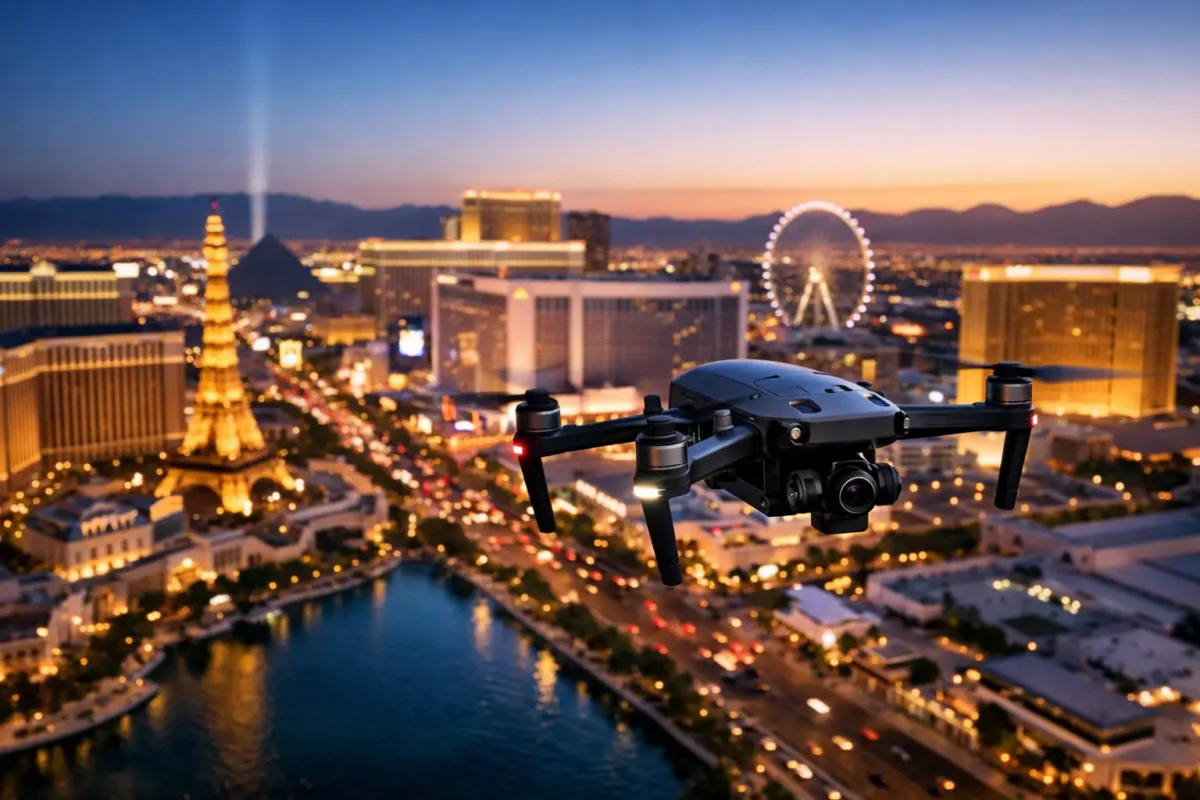
Prohibited Zones: Drones are strictly banned directly over the Las Vegas Strip without special FAA waivers, and flying inside Red Rock Canyon National Conservation Area is restricted by the Bureau of Land Management (BLM).
3. Respecting Privacy Laws
Under Nevada law, drone pilots must respect private property rights. Capturing high-resolution video or photo footage of individuals without permission in areas where they have a reasonable expectation of privacy can result in civil liability.
Core Skills Every Las Vegas Drone Pilot Needs
Technical Flight Proficiency
Mastering your aircraft requires hours of stick time. You must learn to handle sudden wind gusts (common in the Mojave Desert), manual flight overrides, GPS signal dropouts, and emergency return-to-home protocols.
Aerial Photography & Videography Mastery
Operating the aircraft is only half the job. High-value pilots understand:
-
Camera Settings: Balancing shutter speeds (using ND filters), ISO, and shooting in RAW/D-Log for dynamic color grading.
-
Cinematic Movement: Executing smooth orbits, reveals, track shots, and top-down architectural captures.
-
Post-Processing: Using Lightroom, Photoshop, or Premiere Pro to refine aerial imagery for clients.
Best Drones for Aerial Photography
Selecting the right drone depends on your budget, travel needs, and image quality standards.
Top Professional Drone Models
Best Budget-Friendly Drones for Beginners
If you are just launching your drone journey, sub-250g drones are easy to transport and cost-effective:
-
DJI Mini 4 Pro: Excellent obstacle sensing, vertical shooting capability, and 4K video.
-
DJI Mini 3: Lightweight, budget-friendly entry point for high-resolution stills.
-
Autel EVO Nano+: Compact design with great low-light performance.
Where to Fly: Top Locations & Challenges in Las Vegas
Popular Spots for Aerial Shots
-
Seven Magic Mountains: Bright, large-scale art installations surrounded by open desert (check current airspace/land rules prior to flight).
-
Spring Mountain Range & Mt. Charleston: Ideal for dramatic altitude shifts, snowy peaks, and scenic trail coverage.
-
Valley of Fire State Park: Offers striking red sandstone formations (requires state park commercial filming permits).
Challenges of Flying in the City
-
High Ambient Heat: Extreme summer temperatures in Las Vegas can cause drone batteries to overheat, reducing total flight time. Keep batteries cool between flights.
-
RF Interference: Heavy radio frequency interference near resort towers can disturb transmission signals. Keep line-of-sight at all times.
-
Pedestrian Safety: Never fly directly over crowds, moving vehicles, or open-air events without proper FAA waivers.
How to Build a Commercial Drone Career in Las Vegas
1. Identify Your Niche
The Las Vegas commercial drone market spans several high-paying sectors:
-
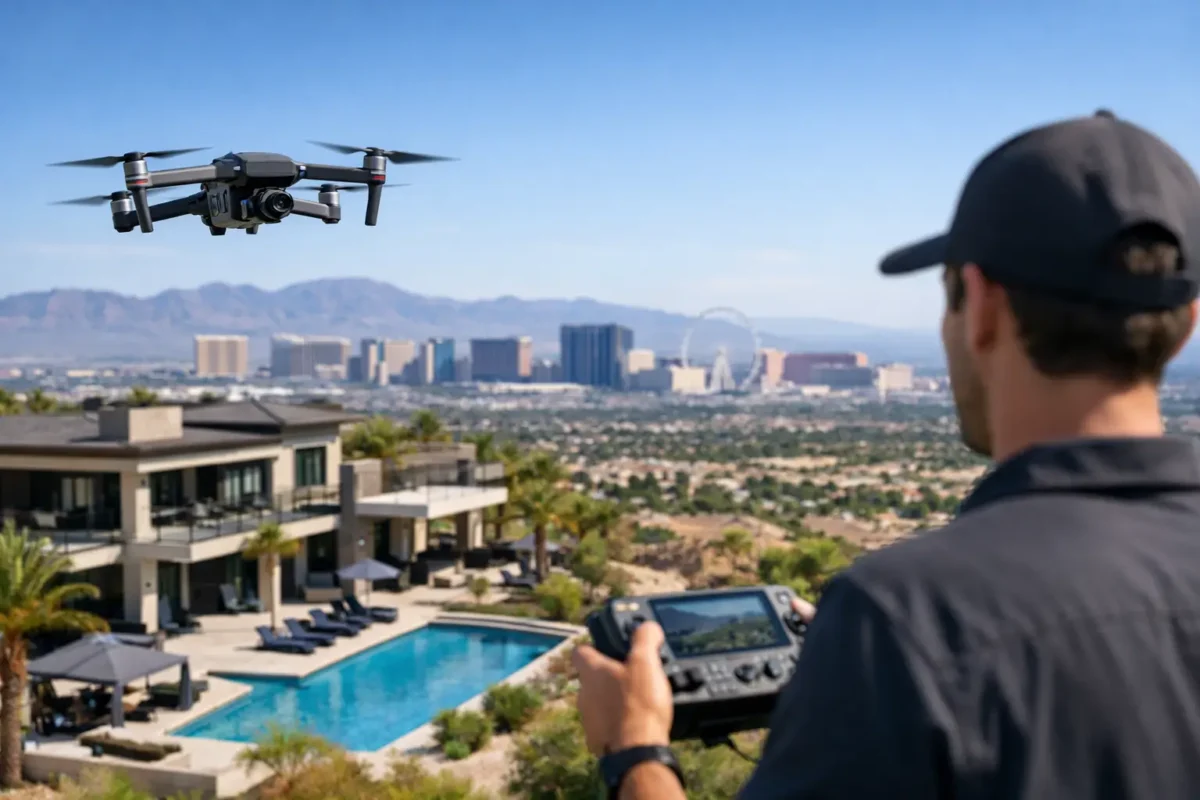
Real Estate Photography: Highlighting luxury estates in Summerlin, Henderson, and The Ridges.
-
Construction Progress Tracking: Providing orthomosaic maps and weekly updates for industrial developments.
-
Events & Hospitality: Filming outdoor venues, resort amenities, and festival highlights.
2. Marketing Your Aerial Services
-
Build an Online Portfolio: Create a fast, mobile-friendly website showcasing your best photo and video reels.
-
Leverage Local SEO: Optimize your Google Business Profile for searches like “Las Vegas drone photographer” or “commercial aerial footage Las Vegas.”
-
Network Locally: Partner with local real estate brokerages, marketing agencies, production crews, and event planners.
Professional Tip: Leading local operations like Sky View LV stand out by committing to 100% FAA Part 107 compliance, carry robust liability insurance, and consistently invest in advanced flight safety training.
Frequently Asked Questions (FAQ)
Do I need a license to fly a drone in Las Vegas?
If you are flying for recreational fun only, you must pass the free FAA TRUST test. If you plan to use drone photos or videos to make money or promote a business, you must hold an FAA Part 107 Remote Pilot Certificate.
Can I fly my drone over the Las Vegas Strip?
Flying over the Las Vegas Strip is strictly regulated due to heavy air traffic, high tourist density, and Class B controlled airspace. Commercial pilots must secure FAA airspace authorization and ensure they do not fly directly over people or moving vehicles.
How much does it cost to get started in drone photography?
A beginner setup (drone, extra batteries, and FAA test fees) starts around $600 to $1,000. Professional commercial setups with cinema-grade drones, software subscriptions, and liability insurance typically range between $2,500 and $5,000+.
Popular Posts
August 13, 2026
August 12, 2026
August 11, 2026
August 09, 2026
August 09, 2026
August 08, 2026
Comments are closed.