AMAZING DRONE PHOTOGRAPHY | 7 tips to get awesome photos every time!
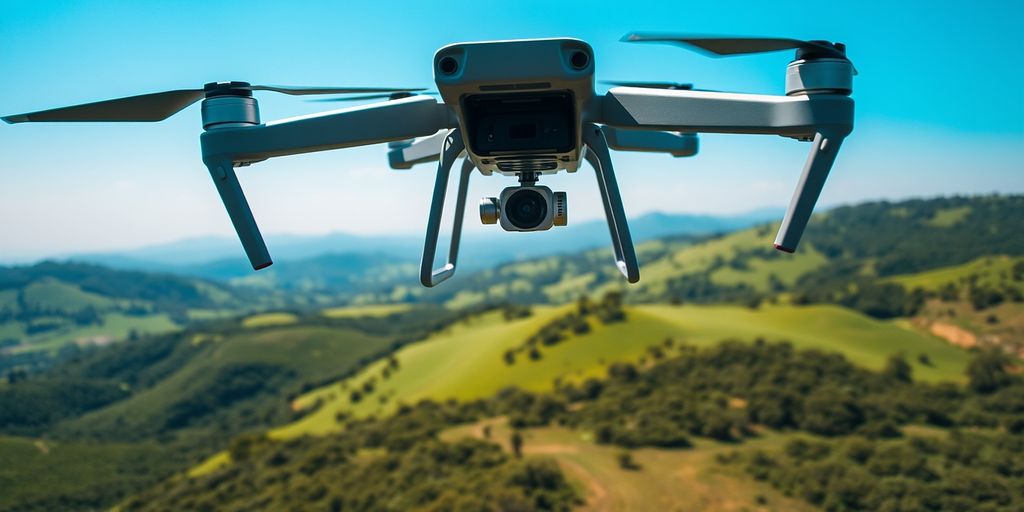
7 Essential Drone Photography Tips for Stunning Aerial Shots
Drones have revolutionized modern photography, enabling creators to capture breathtaking perspectives once impossible to achieve. Whether you are shooting landscapes or commercial sites, mastering aerial composition requires a mix of technical skill and creative planning.
Here are seven essential tips to elevate your drone photography and help you capture crisp, professional images every single time you fly.
Key Takeaways
-
Plan Ahead: Use tools like Google Earth to scout locations before taking off.
-
Focus on a Subject: Give your photos context and narrative depth.
-
Master the Light: Shoot during golden hours to avoid harsh midday glare.
-
Experiment with Angles: Vary your altitude and vantage points for dynamic compositions.
-
Go Manual: Utilize professional camera settings for full control over your exposure.
-
Stack Images for Quality: Reduce digital noise and maximize dynamic range in post-processing.
1. Plan Your Shots with Pre-Flight Scouting
The key to a successful drone shoot starts before you leave the ground. Positioning a camera freely in three-dimensional space offers infinite choices, which can be overwhelming without a plan.
-
Scout Locations Digitally: Use satellite tools like Google Earth to study terrain, sun orientation, and potential obstacles.
-
Check Airspace Rules: Always verify local airspace restrictions and authorization requirements prior to takeoff.
2. Define a Clear Subject
A beautiful landscape isn’t always enough to make a compelling photograph. Without a distinct focus, an aerial photo can feel empty.
-
Add Context: Incorporate elements like architectural features, roads, natural landmarks, or people to give the shot scale.
-
Tell a Story: Ensure your composition conveys a narrative or evokes a specific mood that connects with your audience.
3. Work with Optimal Lighting
Light makes or breaks aerial imagery. Because drone sensors are typically smaller than those of full-frame DSLR or mirrorless cameras, shooting in optimal light is critical.
-
Leverage Golden Hour: Schedule flights around sunrise or sunset to catch warm, low-angle light and rich shadows.
-
Avoid Midday Sun: Harsh overhead lighting at noon flattens details, creates harsh highlights, and dulls natural colors.
4. Vary Your Angles and Perspective
Drones offer a unique spatial flexibility that ground photography cannot match. Take full advantage of it by playing with height and orientation.
-
Try Top-Down Views: Pointing the camera directly downward reveals abstract patterns, textures, and lines invisible from the ground.
-
Adjust Altitude: Sometimes flying just a few feet off the ground produces a much more impactful frame than maxing out your altitude ceiling.
5. Optimize Your Launch Point
Where you set up your ground station directly impacts what you can capture in the air.
-
Maximize Elevation: Take off from an elevated position whenever possible to maintain a line of sight and extend visual reach.
-
Know Your Base: Remember that maximum legal altitude restrictions are measured relative to the ground beneath the drone, so account for terrain elevation changes.
6. Utilize Manual & Advanced Settings
Relying on automatic modes limits your control over image quality. To get professional-grade results, take charge of your camera settings.
-
Manual Exposure: Manually adjust ISO, shutter speed, and aperture to match the lighting conditions. Keep your ISO as low as possible to prevent grain.
-
Auto Exposure Bracketing (AEB): Shoot bracketed exposures ( to 5 frames at different exposure levels) so you can combine them later into a high-dynamic-range (HDR) photo.
7. Use Image Stacking in Post-Processing
When shooting in low light or high-contrast environments, digital noise can degrade your shot quality.
-
Noise Reduction: Take a burst of identical photos and stack them in editing software to average out digital noise.
-
Simulated Long Exposure: Blending multiple stacked frames creates smooth water or motion-blur effects without the need for dark neutral-density (ND) filters.
Final Thoughts
Elevating your aerial photography comes down to careful preparation, understanding light, and taking control of your technical settings. Practice these seven techniques on your next flight, and you will see an immediate jump in image clarity and creative impact.
Popular Posts
August 05, 2026
August 05, 2026
August 03, 2026
August 03, 2026
August 01, 2026
August 01, 2026
Comments are closed.