Capturing the Glittering Nightlife: Aerial Photography in Las Vegas
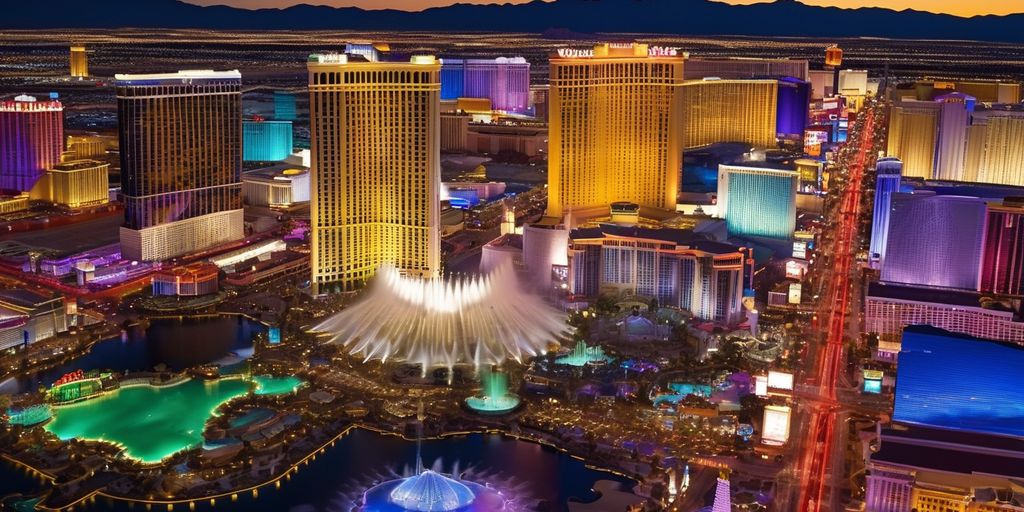
Capturing the Glittering Nightlife: Aerial Photography in Las Vegas
Las Vegas is a city defined by electric energy, iconic architecture, and vibrant neon lights—making it a world-class destination for aerial photographers. Whether you are an amateur enthusiast or a seasoned professional, capturing Sin City from above requires the right gear, advanced flight techniques, and a clear understanding of urban flight rules.
Here is your complete guide to mastering nighttime drone photography in Las Vegas.
Key Takeaways
-
Nighttime Illumination: Las Vegas comes alive after dark; long-exposure settings are essential for capturing light trails and glowing facades.
-
Low-Light Drone Performance: Choose a drone with a large sensor (e.g., 1-inch or larger) to maximize image clarity and minimize noise.
-
Strict Urban Regulations: Adhere closely to FAA guidelines, local no-fly zones, and airspace restrictions near Harry Reid International Airport.
-
Creative Flight Paths: Subtle camera movements—such as slow ascents, reveals, and orbits—tell a stronger narrative than aggressive maneuvers.
1. Top Spots to Photograph in Las Vegas
The Las Vegas Strip
The heart of the city offers unparalleled density. Capture sweeping views of iconic hotel-casinos, synchronized fountain displays, and the streaming vehicle lights along the boulevard using long-exposure techniques.
Red Rock Canyon
Located just minutes west of the city, Red Rock Canyon provides a dramatic natural contrast to the urban neon. Shoot during golden hour or early morning to emphasize the vibrant red sandstone formations.
Hidden Gems & Off-Strip Landmarks
Look beyond the main Strip. Fremont Street, local parks, and unique suburban architecture offer fresh perspectives that stand out in professional portfolios, real estate listings, and tourism campaigns.
2. Best Drone Gear & Camera Settings for Night Photography
Capturing sharp, noise-free images in low-light conditions depends on your equipment and settings:
-
Select the Right Drone: Look for platforms renowned for low-light stability and dynamic range, such as the DJI Mavic 3 Pro, DJI Air 3, or Autel EVO Lite+.
-
Master Long Exposures: Keep your shutter open for 1 to 3 seconds to capture movement while keeping your camera steady.
-
Optimize ISO & Aperture: Keep your ISO as low as possible (ISO 100–400) to minimize digital grain, using wider apertures ($f/2.8$ or lower) to let in maximum light.
3. Advanced Cinematography & Editing Techniques
To elevate your visuals from simple snapshots to professional-grade imagery:
-
Embrace Subtle Movements: Use slow, controlled ascents, gentle lateral drifts, or steady orbiting paths around major landmarks.
-
Build a Visual Narrative: Let the flight path complement the architecture rather than distract from it.
-
Targeted Post-Processing: Use editing tools like Adobe Lightroom to fine-tune highlights, adjust shadow contrast, balance neon color saturation, and apply selective noise reduction.
4. Navigating Urban Drone Challenges in Las Vegas
Airspace Restrictions & No-Fly Zones
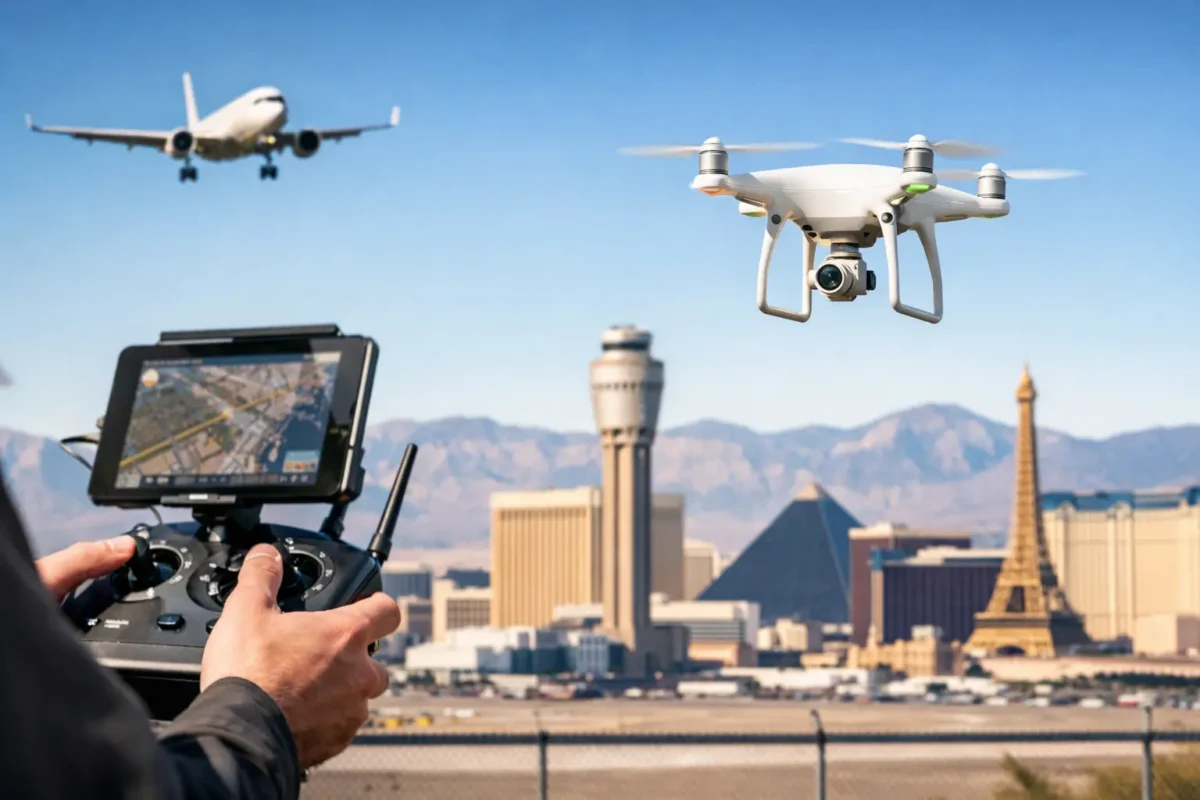
Because Las Vegas features heavy air traffic and close proximity to Harry Reid International Airport (LAS), large portions of the Strip sit in controlled airspace. Always consult FAA-approved LAANC apps (such as Aloft, Air Control, or B4UFLY) to obtain digital airspace authorization before taking off.
Wind & Desert Weather
Sudden gusty winds are common in the desert basin. Check local wind forecasts prior to launching, and ground your aircraft if wind speeds exceed 15 mph.
Safety & Privacy
Avoid flying directly over crowds, busy roadways, or private residential property without express permission. Safe, respectful flying protects the community and ensures drone access remains open for creators.
Frequently Asked Questions
What are the best camera settings for capturing neon signs at night?
Use a low ISO setting, set a balanced shutter speed to avoid blown-out highlights on bright signs, and shoot in RAW format so you can recover highlight details during editing.
How do I get authorization to fly near the Las Vegas Strip?
Use an FAA LAANC provider app to submit automated airspace authorization requests if you plan to fly in controlled airspace segments surrounding local airports.
The Strip area is highly restricted – do not attempt to fly without the proper FAA waivers.
How can I reduce grain in low-light aerial photos?
Keep your ISO low during capture, ensure your drone remains stable, and apply subtle noise reduction in post-processing software like Adobe Lightroom or Topaz Photo AI.
Popular Posts
August 07, 2026
August 05, 2026
August 05, 2026
August 03, 2026
August 03, 2026
August 01, 2026
Comments are closed.